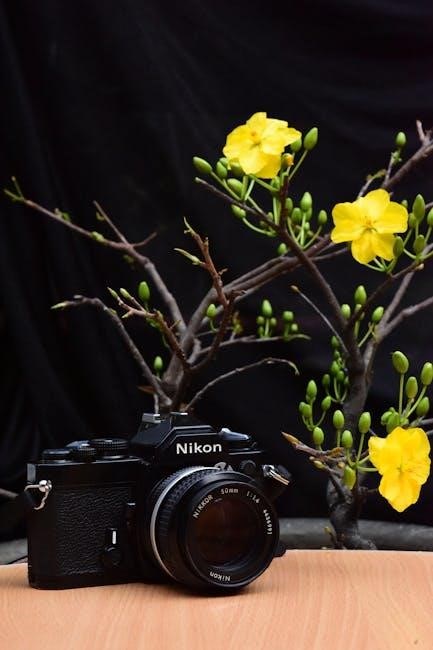
The Nikon FE, a classic 35mm film SLR, boasts readily available user manuals online, including free downloads from the Internet Archive and dedicated manual libraries.
Service manuals and repair information are also accessible for electronics experts, aiding in maintaining this iconic camera’s functionality for years to come.
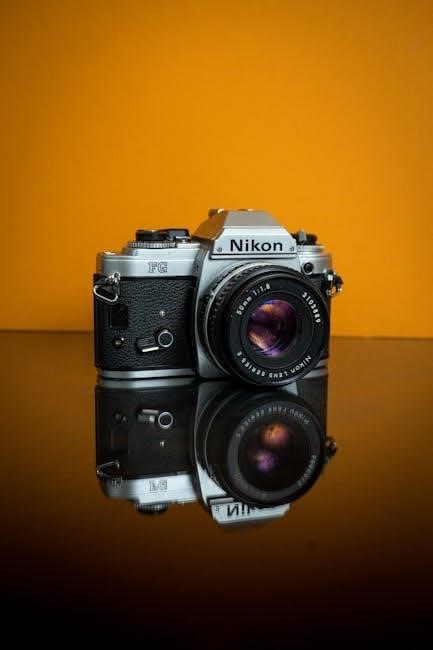
Overview of the Nikon FE
The Nikon FE, released in 1983, quickly became a favorite among photography enthusiasts due to its blend of advanced features and user-friendly operation. Numerous resources, including comprehensive user manuals, are readily available online, simplifying the learning process for both beginners and experienced photographers.
These manuals, often found on platforms like the Internet Archive, provide detailed guidance on everything from film loading to mastering the camera’s aperture-priority auto exposure mode. The availability of service manuals further empowers those comfortable with camera repair, offering schematics and repair information.
The Nikon FE’s enduring popularity is reflected in the continued accessibility of these resources, ensuring its legacy lives on through continued use and maintenance.
Key Features and Specifications
The Nikon FE’s core functionality revolves around its aperture-priority auto exposure, a feature extensively detailed in available user manuals. It accepts Nikon F-mount lenses, offering a vast selection of optical choices. The camera operates on two SR44 batteries, powering its electronic shutter and exposure system.
Key specifications include a focal plane shutter with speeds from 2 to 1/4000 of a second, and a built-in exposure meter. Manuals highlight the importance of correct ISO setting for accurate metering.
Service manuals delve into the camera’s internal components, while user guides focus on practical operation, making both essential resources for understanding and maintaining this classic camera.
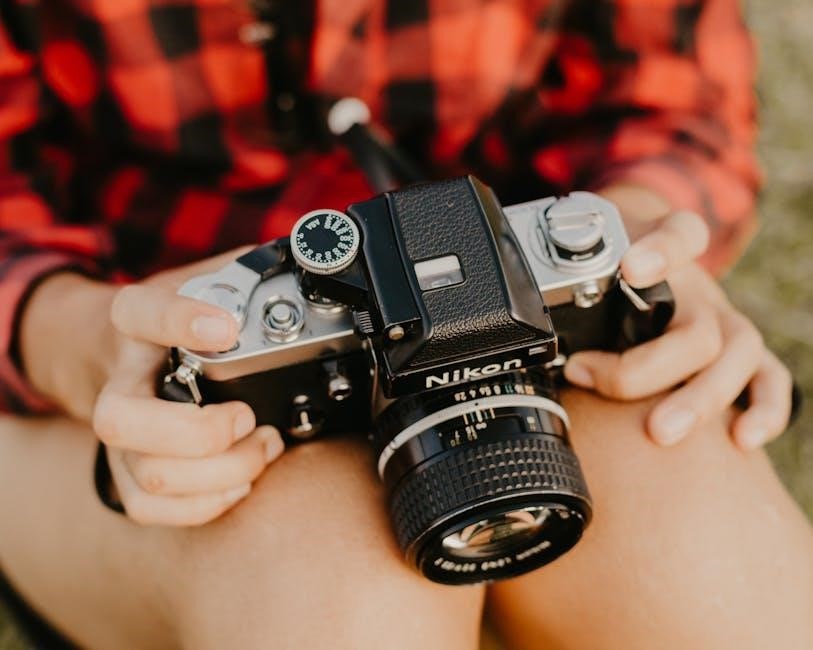
Setting Up Your Nikon FE
User manuals detail the initial setup, covering film insertion, battery installation, and proper loading/unloading procedures for optimal performance and longevity of the camera.
Inserting Film and Batteries
The Nikon FE requires both film and batteries to operate, and the user manual provides clear instructions for each. To insert film, open the camera back using the film release lever. Load a 35mm film cartridge into the film chamber and thread the film leader onto the take-up spool.
Advance the film a couple of frames and close the camera back. For batteries, the Nikon FE utilizes standard button-cell batteries to power its electronic shutter and metering system. The manual details the correct battery type and placement within the camera base. Ensure proper polarity when inserting the batteries for reliable operation.
Always refer to the manual for specific guidance, as incorrect film loading or battery installation can lead to malfunctions or damage to the camera.
Loading and Unloading Film
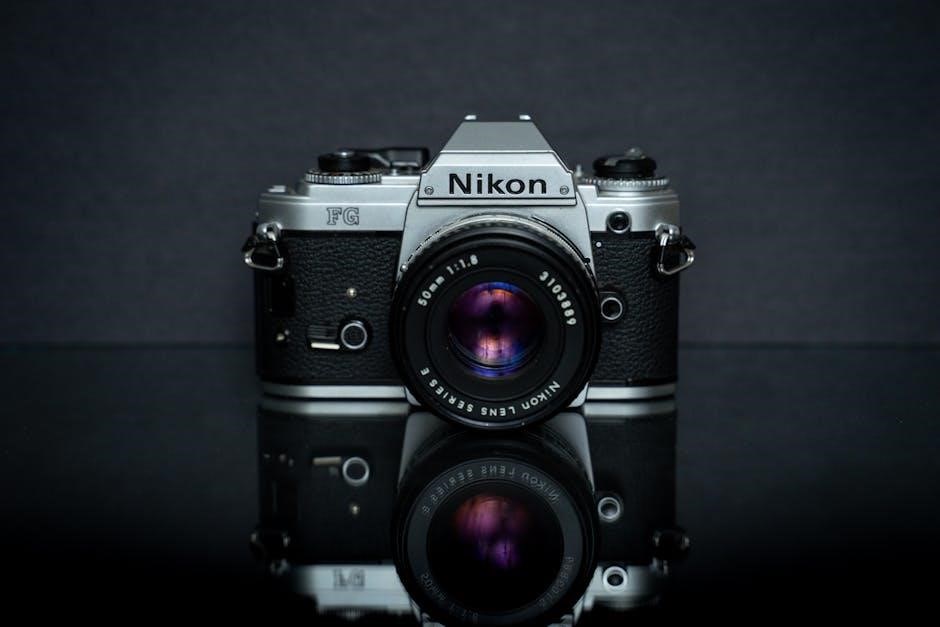
The Nikon FE’s user manual emphasizes careful film handling. To load, release the film using the film rewind knob, open the back, and seat the cartridge. Thread the film leader to the take-up spool, advancing it gently with the film advance lever until it engages. Close the back securely.
Advancing two or three frames ensures proper engagement before shooting. Unloading is equally straightforward; press the film rewind button on the camera base and turn the rewind knob in the direction of the arrow.
Continue rewinding until you feel the film release completely from the take-up spool. Open the back and remove the film cartridge. The manual stresses avoiding bright light during loading and unloading to prevent light leaks.
Setting the ISO
The Nikon FE user manual details a straightforward ISO setting process. Located around the film speed dial, the dial allows selection of various ISO values, typically ranging from 12 to 3200. To adjust, lift the dial’s locking pin, rotate it to the desired ISO setting corresponding to your film’s speed, and then release the pin.
Ensure the pin is securely locked to prevent accidental changes during shooting. The manual highlights the importance of accurate ISO setting for proper exposure.
Incorrect settings will lead to under or overexposed images. When using films with non-standard ISOs, select the closest available setting and consider using exposure compensation if needed.
Understanding the Exposure System
The Nikon FE’s user manual emphasizes its aperture-priority auto exposure. Users control aperture, and the camera automatically selects the appropriate shutter speed for correct exposure.
Aperture Priority Mode
The Nikon FE truly shines with its aperture-priority auto exposure mode, a cornerstone of its user experience as detailed in available manuals. This allows photographers to directly control the depth of field by selecting the desired aperture (f-stop), while the camera intelligently calculates and sets the appropriate shutter speed for optimal exposure.
This mode is particularly beneficial for creative control, enabling manipulation of background blur (bokeh) and sharpness throughout the image. The user manual guides photographers on understanding the relationship between aperture and depth of field, offering practical advice for various shooting scenarios; The camera’s metering system plays a crucial role, continuously assessing light levels to ensure accurate automatic shutter speed selection. Mastering aperture priority unlocks the FE’s potential for artistic expression and consistently well-exposed photographs.
Shutter Speed Control
While the Nikon FE excels in aperture-priority, understanding shutter speed control is vital, as detailed within its user manual. Though primarily automatic in aperture priority, the FE offers full manual control, allowing photographers to independently set both aperture and shutter speed for complete creative command.
Shutter speeds range from 1 second to 1/1000th of a second, influencing motion blur and overall image brightness. The manual explains how faster shutter speeds freeze action, while slower speeds create motion blur. Manual control is essential for situations where the camera’s metering might be fooled, like shooting in snow or with strong backlighting. Learning to balance aperture and shutter speed, guided by the FE’s manual, unlocks the camera’s full potential for diverse photographic styles.
Exposure Compensation
The Nikon FE’s user manual details its exposure compensation feature, crucial for refining automatic metering. When the camera’s meter is misled by challenging lighting – such as very bright or very dark scenes – exposure compensation allows photographers to override the automatic setting.
A +/- 2 stop range is available, enabling adjustments to either brighten or darken the image. The manual illustrates how to use the compensation dial to fine-tune exposure, ensuring accurate results in tricky situations. Understanding this feature is key to mastering the FE’s aperture-priority mode and achieving consistently well-exposed photographs, even when the camera’s meter doesn’t perfectly interpret the scene.
Focusing and Metering
The Nikon FE user manual thoroughly explains focusing techniques and metering modes, vital for sharp, correctly exposed images. Mastering these elements unlocks the camera’s full potential.
Focusing Techniques
Achieving sharp focus with the Nikon FE relies on understanding its manual focusing system. The user manual details how to utilize the split-image rangefinder in the viewfinder, a crucial aid for precise focusing. This system divides the image into two parts; when in focus, these parts merge seamlessly.
For subjects lacking sufficient contrast, the manual suggests employing the cross-hair focusing points. Careful observation of these points, aligned with your intended subject, ensures accurate focus. Remember to adjust the focusing ring on the lens until the desired sharpness is achieved.
Depth of field is also addressed, explaining how aperture selection impacts the area in acceptable focus. The manual guides users in predicting and controlling depth of field for creative effects and ensuring critical sharpness where needed. Practice and familiarity with these techniques are key to consistently sharp results.
Metering Modes Explained
The Nikon FE’s user manual thoroughly explains its center-weighted metering system. This mode prioritizes light readings from the central area of the frame, diminishing sensitivity towards the edges. It’s ideal for general photography where the primary subject is centrally located.
Understanding this weighting is crucial for accurate exposures. The manual advises users to point the meter at the most important part of the scene, ensuring it occupies the central metering area.
While the FE doesn’t offer multiple metering modes, the manual details how to utilize exposure compensation to fine-tune readings in challenging lighting situations. This allows photographers to override the meter’s suggestion and achieve the desired brightness and contrast in their images.
Using the Viewfinder
The Nikon FE’s user manual details the information displayed within the viewfinder. Users will find a center-weighted metering spot, aiding in accurate exposure readings. Brightness indicators, displayed as LEDs, show underexposure, correct exposure, and overexposure, guiding photographers to adjust settings.
The manual emphasizes the importance of understanding these indicators. A flashing LED signals potential overexposure, while a dim one suggests underexposure. The viewfinder also incorporates a split-image focusing aid, facilitating sharp image capture.
Furthermore, the manual explains how the viewfinder displays shutter speed information when in aperture-priority mode, ensuring photographers maintain control and achieve their desired creative effects.
Advanced Features and Functions
The Nikon FE user manual covers depth of field control, self-timer operation, and multiple exposure techniques, expanding creative possibilities for photographers utilizing this camera.
Depth of Field Control
Understanding depth of field is crucial for creative control, and the Nikon FE user manual provides guidance on achieving desired results. Depth of field, the area appearing sharp in your photograph, is influenced by aperture, focal length, and distance to the subject.
A smaller aperture (higher f-number) increases depth of field, ideal for landscapes where sharpness throughout the scene is desired. Conversely, a larger aperture (lower f-number) creates a shallow depth of field, effectively isolating the subject against a blurred background – perfect for portraits.
The manual details how to utilize the aperture ring on Nikon FE lenses to manipulate depth of field. Experimentation is key to mastering this technique and achieving visually compelling images. Consider the subject matter and desired aesthetic when selecting the appropriate aperture setting.
Self-Timer Operation
The Nikon FE’s self-timer function allows for delayed shutter release, perfect for group photos or when the photographer wants to be included in the shot. The user manual clearly illustrates the self-timer lever’s location and operation.
To activate the self-timer, move the lever to the ‘T’ position. This initiates a roughly 10-second delay before the shutter fires. The manual emphasizes observing the small indicator light near the shutter button, which blinks during the countdown.
Pressing the shutter button after activating the self-timer starts the timer. Avoid touching the camera during the delay to prevent unwanted movement. The manual also notes that the self-timer is cancelled when the lever is returned to its original position.
Multiple Exposure Techniques
The Nikon FE enables creative multiple exposures, allowing photographers to superimpose images onto a single frame. The user manual details how to achieve this by utilizing the rewind release button.
After taking the first exposure, keep the film advance lever depressed and press the rewind release button. This disengages the film advance mechanism, permitting re-cocking the shutter without advancing the film.
Carefully re-cock the shutter and compose the second image. Pressing the shutter button again will expose the second image onto the same frame. The manual advises experimenting with exposure compensation to avoid overexposure. Repeat as desired, remembering to return the rewind release button to its original position after completing the sequence.
Troubleshooting and Maintenance
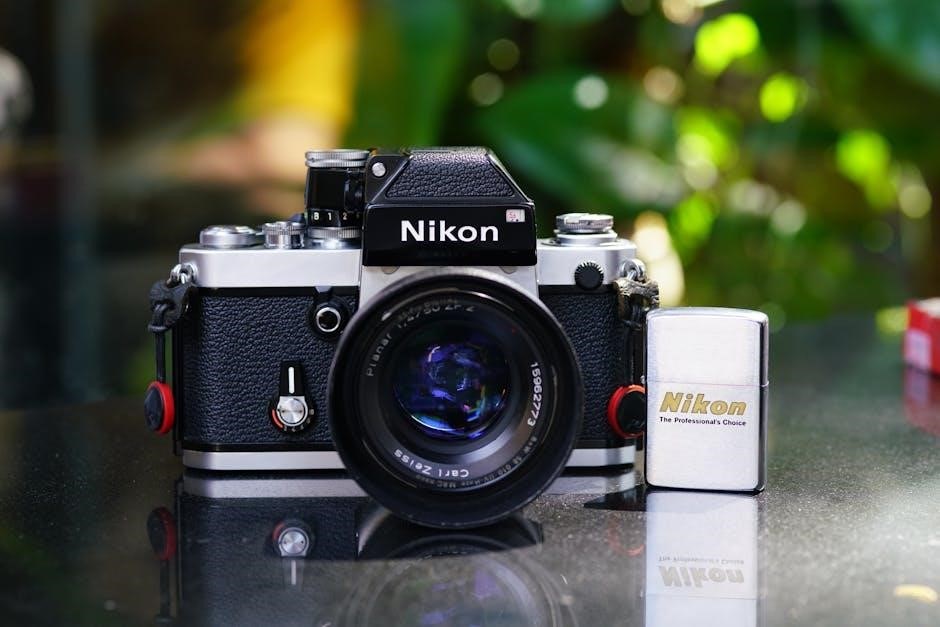
Nikon FE repair resources, service manuals, and schematics are available online for electronics experts. Regular cleaning and proper storage are crucial for longevity.
Common Issues and Solutions
Addressing common Nikon FE issues often begins with the shutter. Sticky shutters are frequent, requiring professional cleaning or, for experienced users, careful self-repair using service manuals.
Metering inaccuracies can stem from aging foam light seals affecting light readings; replacement is a straightforward fix. Battery corrosion within the battery compartment is another potential problem, demanding thorough cleaning to prevent further damage.
Film advance issues might indicate a worn cloth or dried lubricants, necessitating a CLA (Clean, Lubricate, and Adjust) service; Finally, viewfinder problems, like dimness, could signal internal component degradation, often requiring expert attention. Always consult available resources before attempting repairs.
Cleaning and Storage
Proper cleaning preserves your Nikon FE’s longevity. Gently remove dust from the body and lens with a soft brush or microfiber cloth; avoid harsh chemicals or solvents.
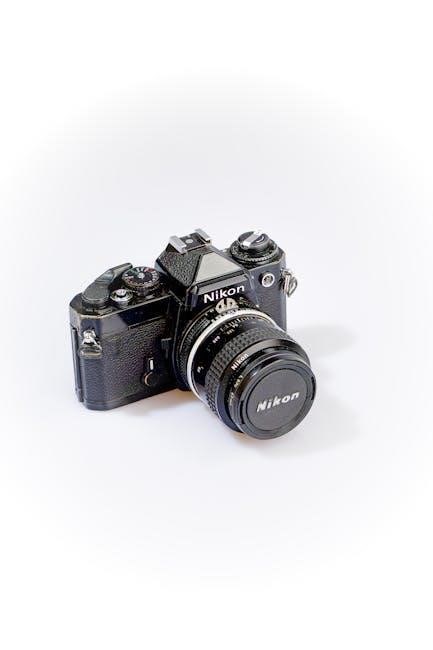
Regularly check and replace the foam light seals to prevent light leaks and maintain accurate metering. When storing, remove the batteries to avoid corrosion and keep the camera in a cool, dry place.
A dedicated camera bag offers protection against dust, moisture, and accidental impacts. Long-term storage benefits from a desiccant packet to absorb humidity. Periodic inspection ensures the camera remains in optimal condition, ready for its next use.
Nikon FE Repair Resources
For Nikon FE repairs, dedicated resources cater to both amateur and professional technicians. Service manuals, downloadable online, provide schematics and repair information for electronics experts.
Online forums and communities offer valuable troubleshooting advice and shared experiences from fellow Nikon FE users. Specialized camera repair shops possess the expertise and tools for complex issues.
Consider the cost of repair versus replacement, especially for older cameras. DIY repairs are possible with the right skills and documentation, but proceed cautiously. Reliable repair resources ensure your Nikon FE continues to function optimally.