Lord of the Flies PDF: A Comprehensive Guide (Updated 02/11/2026)

Discover comprehensive resources for accessing the “Lord of the Flies” in PDF format! Explore options from PDFDrive and other sources, ensuring convenient reading of Golding’s classic novel.
What is “Lord of the Flies”?
“Lord of the Flies,” penned by the esteemed English author William Golding, is a profoundly impactful dystopian novel first published in 1954. It’s a compelling exploration of human nature, societal structures, and the inherent conflict between civilization and savagery. The narrative unfolds as a group of British schoolboys find themselves stranded on a deserted island after a plane crash during a wartime evacuation.
Initially, the boys attempt to govern themselves, establishing rules and electing Ralph as their leader; However, as time progresses, their attempts at order gradually unravel. The allure of primal instincts and unchecked power, embodied by Jack, leads to a descent into chaos and violence. The story serves as a potent allegory for the fragility of social order and the darkness lurking within humanity.
Finding a “Lord of the Flies” PDF file allows convenient access to this literary masterpiece. Numerous online platforms offer digital copies, enabling readers to delve into Golding’s thought-provoking work at their leisure. The novel continues to be a staple in educational curricula worldwide, prompting critical discussions about morality, power, and the human condition.
The Novel’s Core Themes
“Lord of the Flies” delves into several profoundly resonant themes, making it a continually relevant work. Central to the narrative is the conflict between civilization and savagery, vividly portrayed through the boys’ descent from organized society to primal chaos. The novel explores the inherent darkness within human nature, suggesting that even in a seemingly idyllic setting, destructive impulses can emerge.
Power and its corrupting influence are also key themes. The struggle for leadership between Ralph and Jack demonstrates how easily power can be abused and how quickly a desire for control can override reason and compassion. Furthermore, Golding examines the loss of innocence, as the boys’ experiences on the island shatter their naive worldview.
Accessing a “Lord of the Flies” PDF facilitates a deeper engagement with these complex ideas. Studying the text allows readers to analyze Golding’s symbolism and explore the novel’s enduring commentary on human behavior. The themes resonate powerfully, prompting reflection on societal structures and individual morality.
Finding a Free “Lord of the Flies” PDF Download
Locating a free “Lord of the Flies” PDF download requires careful navigation. Numerous websites claim to offer free access, but caution is paramount due to potential security risks and copyright concerns. Several online platforms, like PDFDrive, present themselves as repositories for freely downloadable PDF files, including classic literature.
However, users should exercise diligence. Before downloading, verify the website’s legitimacy and scan the downloaded file with updated antivirus software. Be wary of sites requesting personal information or displaying excessive advertisements. Alternative options include exploring digital libraries or utilizing online previews offered by booksellers.
Remember that accessing copyrighted material without proper authorization may be illegal. While free PDFs can be convenient, prioritizing legal and safe download sources is crucial. Consider exploring legitimate ebook retailers or borrowing the book from a local library as alternative, ethical options.
Reliable Sources for PDF Downloads
When seeking a “Lord of the Flies” PDF, prioritizing reliable sources is essential for a safe and legal download experience. While completely free options can be tempting, they often come with risks. Better World Books occasionally lists downloadable versions, though availability fluctuates. Exploring established online bookstores like Amazon or Barnes & Noble, even for sample chapters or digital editions, provides a secure alternative.
Project Gutenberg, a repository of free ebooks with expired copyrights, is a trustworthy source, though “Lord of the Flies” may not always be available due to ongoing copyright restrictions. University and public library websites often offer access to ebooks, including PDFs, through digital lending programs.
Always verify the website’s security (look for “https” in the address bar) and read user reviews before downloading. Avoid suspicious sites with excessive ads or requests for personal information. Remember, supporting authors and publishers through legal purchases ensures continued access to quality literature.
PDFDrive as a Source
PDFDrive presents itself as a search engine specifically for PDF files, including a listing for “Lord of the Flies.” However, users should approach this platform with caution. While it offers a seemingly convenient way to access the novel in PDF format, the legality of the content available on PDFDrive is often questionable.
The site aggregates links from various sources, and it’s not always clear whether these sources have the legal right to distribute the material. Downloading copyrighted works without permission is illegal and unethical. PDFDrive itself claims to not host the files, but rather to link to them, which doesn’t absolve users of responsibility.
Furthermore, downloading from such platforms carries risks of malware or viruses. Always have updated antivirus software running. Consider PDFDrive as a last resort, and prioritize legally obtained PDFs from reputable sources to support authors and avoid potential legal or security issues.
Understanding File Formats: PDF, FB2, EPUB
When seeking a digital copy of “Lord of the Flies,” you’ll encounter various file formats. PDF (Portable Document Format) is widely used, preserving the original formatting, making it ideal for academic study and consistent appearance across devices. However, PDFs can be less adaptable to different screen sizes.
FB2 (FictionBook 2) is a format designed specifically for fiction, allowing text reflowing to fit various e-readers and devices. It focuses on content rather than precise layout. You can find “Lord of the Flies” available for download in FB2, offering a flexible reading experience.
EPUB (Electronic Publication) is another popular ebook format, known for its reflowable text and support for various fonts and sizes. It’s widely compatible with most e-readers and reading apps. Choosing between these formats depends on your preference for formatting preservation versus reading flexibility. Each offers access to Golding’s novel, but with different reading experiences.
Legality of Downloading PDFs
The legality of downloading a “Lord of the Flies” PDF hinges on the source and your intent. Downloading from unauthorized websites offering free copies is generally illegal, constituting copyright infringement. William Golding’s work remains protected by copyright, and distributing or obtaining it without permission violates these rights.
Legally, you can download a PDF if you purchase it from authorized retailers like Amazon Kindle, Google Play Books, or other ebook stores. Libraries often offer digital lending services, providing legal access to PDF versions of books, including “Lord of the Flies.”
Accessing a PDF for personal educational purposes may fall under fair use, but this is a complex legal area. Always prioritize legitimate sources to avoid legal repercussions and support authors and publishers. Respecting copyright ensures continued creation and availability of literary works like Golding’s masterpiece.

Risks Associated with Unofficial Downloads
Downloading a “Lord of the Flies” PDF from unofficial sources carries significant risks. These websites often harbor malware, viruses, and spyware that can compromise your device and personal data. Such files can lead to identity theft, financial loss, and system instability.
Unofficial PDFs frequently contain poor formatting, missing pages, or corrupted text, diminishing the reading experience. Furthermore, these downloads often violate copyright laws, potentially exposing you to legal consequences, though this is less common for individual downloads.
Beyond technical threats, supporting unauthorized downloads undermines authors and publishers, hindering the creation of future literary works. Prioritize reputable sources offering legally obtained PDFs. Always scan downloaded files with updated antivirus software before opening them. Protecting your digital security and respecting intellectual property are crucial when accessing online content.

The Plot Summary: A Quick Overview
“Lord of the Flies” chronicles a group of British schoolboys stranded on a deserted island after a plane crash during a wartime evacuation. Initially, they attempt to govern themselves, establishing rules and electing Ralph as their leader. However, the allure of primal instincts and savagery gradually takes hold, particularly through Jack, who champions hunting and a more unrestrained lifestyle.
As the boys descend into chaos, the carefully constructed societal order crumbles. Fear of a mythical “beast” fuels their anxieties and contributes to the escalating violence. Simon, a perceptive and spiritual boy, discovers the true nature of the beast – the inherent darkness within themselves – but is tragically misunderstood and killed.
The novel culminates in a desperate hunt for Ralph, the last vestige of civilization, as Jack’s tribe embraces complete savagery. Ultimately, they are rescued by a naval officer, bringing a jarring return to the adult world and highlighting the fragility of human order.
Key Characters in “Lord of the Flies”
The novel features a compelling cast representing different facets of human nature. Ralph embodies leadership and the desire for civilization, striving to maintain order and signal for rescue. Conversely, Jack represents unchecked savagery, prioritizing hunting and immediate gratification, ultimately leading a descent into primal chaos.

Simon stands out as a profoundly insightful and spiritual character, understanding the true nature of the “beast” as an internal evil. Tragically, his attempts to communicate this truth are met with violence. Piggy, often ridiculed, embodies intellect and reason, consistently advocating for logic and rules, but is ultimately a victim of the boys’ escalating brutality.
Other significant characters include Roger, who embodies pure sadism, and Samneric, twins representing the loss of individuality within the group. These characters, explored within the “Lord of the Flies” PDF, collectively illustrate Golding’s exploration of human nature’s inherent duality.
Ralph: Leadership and Civilization
Ralph, initially elected leader, symbolizes the human impulse towards order and democratic governance. He prioritizes building shelters, maintaining a signal fire for rescue, and establishing rules – representing civilization’s structures. As detailed in the “Lord of the Flies” PDF, Ralph’s leadership is rooted in a belief in reason and collective effort.
However, Ralph struggles to compete with Jack’s appeal to primal instincts. His commitment to long-term goals clashes with the boys’ immediate desires for hunting and fun. He embodies the frustration of attempting to impose rationality on a group succumbing to savagery. The PDF highlights Ralph’s growing isolation as the boys abandon his principles.
Despite his flaws, Ralph remains a beacon of hope, desperately clinging to the idea of rescue and the values of the adult world. His eventual breakdown and pursuit by Jack’s tribe underscore the fragility of civilization in the face of unchecked human impulses, a central theme explored throughout the novel.
Jack: Savagery and Instinct
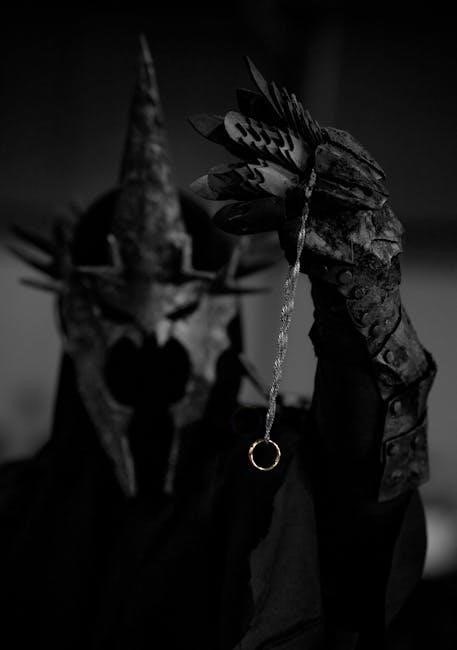
Jack Merridew represents the primal instincts of human nature – a descent into savagery and the allure of unrestrained power. Initially a choirboy, Jack quickly embraces hunting and revels in the thrill of the kill, as depicted within the “Lord of the Flies” PDF. He skillfully exploits the boys’ fears and desires, offering immediate gratification through feasts and freedom from responsibility.
The PDF illustrates Jack’s manipulative tactics and his growing disregard for rules and reason. He appeals to the boys’ baser instincts, painting Ralph’s focus on rescue as weak and unnecessary. His painted face symbolizes a shedding of civilized constraints, allowing him to fully embrace his savage impulses.

Jack’s leadership is based on dominance and intimidation, ultimately leading to a fractured society consumed by violence and fear. He embodies the darkness within humanity, demonstrating how easily civilization can crumble when confronted with unchecked primal urges. His character serves as a chilling warning about the potential for savagery within us all.
Simon: Insight and Spirituality
Simon stands as a profoundly symbolic figure in “Lord of the Flies,” representing innate human goodness and a spiritual connection to nature. The “Lord of the Flies” PDF reveals Simon’s quiet introspection and his ability to perceive truths others miss. He understands the “beast” isn’t a physical creature, but rather a darkness residing within the boys themselves – a realization tragically misunderstood.
Unlike the others, Simon isn’t driven by a desire for power or dominance. He finds solace in solitude and communion with the natural world, demonstrating a deep empathy and understanding. His encounter with the Lord of the Flies – the pig’s head on a stick – is a pivotal moment, revealing the inherent evil within humanity.
Simon’s attempt to share this crucial insight is tragically cut short, as he is mistaken for the beast and brutally murdered. His death symbolizes the loss of innocence and the triumph of savagery, highlighting Golding’s pessimistic view of human nature. He is a martyr for truth and understanding.
Piggy: Intellect and Reason
Piggy, often ridiculed for his physical appearance and asthma, embodies intellect, reason, and scientific thinking within the chaotic world of “Lord of the Flies.” A careful reading of the “Lord of the Flies” PDF highlights Piggy’s consistent attempts to establish order and utilize logic – qualities largely dismissed by the other boys, particularly Jack.
He represents the adult world of rules, reason, and civilization, constantly advocating for thoughtful planning and democratic processes. Piggy’s glasses, crucial for starting the fire, symbolize the power of intellect and the importance of clear vision. He is the voice of practicality, urging the boys to prioritize rescue over impulsive hunting.
Tragically, Piggy’s reliance on reason makes him vulnerable in a society descending into savagery. His brutal murder, alongside the destruction of his glasses, signifies the complete abandonment of intellect and the triumph of primal instincts. He is a poignant symbol of lost potential and the fragility of civilization.
The Symbolism of the “Lord of the Flies”
A deep dive into any “Lord of the Flies” PDF reveals a rich tapestry of symbolism, extending far beyond the literal depiction of a pig’s head on a stick. The “Lord of the Flies” itself represents the inherent evil within human nature, the primal instincts of savagery that reside beneath the veneer of civilization.
The conch shell symbolizes order, democracy, and rational discourse. Its destruction mirrors the boys’ descent into chaos and the loss of civilized structure. Similarly, the signal fire embodies hope, rescue, and connection to the adult world; its neglect signifies their growing detachment from reason and responsibility.
Piggy’s glasses represent intellect and clear vision, while Jack’s painted face symbolizes the shedding of inhibitions and embrace of primal instincts. The island itself can be interpreted as a microcosm of the world, highlighting the universal struggle between good and evil. Understanding these symbols is crucial to fully grasping Golding’s message.
Analyzing the Ending and its Implications
The concluding scenes of “Lord of the Flies,” readily available within any comprehensive PDF version, are profoundly impactful. The arrival of the naval officer, initially appearing as a savior, ironically underscores the boys’ mirroring of adult savagery – a chilling realization.
Ralph’s weeping isn’t simply for lost innocence, but for the “darkness of man’s heart,” acknowledging the inherent evil within everyone. The officer’s detached observation highlights humanity’s own capacity for conflict and brutality, suggesting the island wasn’t an isolated incident, but a reflection of the wider world.
The ending isn’t a triumphant rescue, but a sobering acknowledgment of the fragility of civilization. Golding’s intention isn’t to offer solutions, but to provoke contemplation on the nature of good and evil. A “Lord of the Flies” PDF allows for repeated analysis of these nuanced themes, prompting readers to question societal structures and individual responsibility.
Historical Context and Author William Golding
William Golding, the author of “Lord of the Flies,” experienced World War II firsthand as a naval officer – a pivotal influence shaping the novel’s themes. Published in 1954, the book emerged during the Cold War, a period defined by anxieties surrounding nuclear annihilation and ideological conflict. This backdrop fueled Golding’s exploration of humanity’s inherent darkness.
The post-war era also witnessed a growing disillusionment with utopian ideals. Golding challenged the romanticized notion of “the noble savage,” presenting a starkly contrasting view of human nature when stripped of societal constraints. Accessing a “Lord of the Flies” PDF provides a direct connection to this historical moment.
Golding’s own rigorous classical education deeply informed his writing, evident in the novel’s allegorical structure and symbolic depth. He aimed to dissect the complexities of human behavior, questioning assumptions about morality and civilization. Studying the novel within its historical context, easily facilitated by a PDF copy, enriches understanding.